


News
Oil Filter, Fuel Filter and Cabin Filter Intervals: A Workshop Cheat Sheet
Filters are the cheapest parts on a service schedule and the most expensive to ignore. In dusty, hot markets — West Africa, the Gulf of Guinea coast, parts of Southeast Asia — a filter that would last a full year in Europe can be fully loaded in a few months. Below is the interval sheet we send to distributors and workshops: written in kilometres, easy to convert to engine hours for fleet use.
Quick Reference: Typical Replacement Intervals
- Engine air filter — 15,000–20,000 km, or every 12 months. Inspect every 5,000 km in dusty conditions and replace at 10,000 km if the pleats are visibly loaded.
- Oil filter — at every oil change. With mineral or semi-synthetic oil that usually means 5,000–7,500 km; with full synthetic, follow the oil maker’s interval and never exceed 12 months.
- Fuel filter — 20,000–40,000 km on petrol engines, 10,000–20,000 km on diesel, and drain the water separator monthly. One tank of contaminated fuel can block a filter in a single day.
- Cabin (A/C) filter — 15,000–20,000 km or once a year, and always before the rainy season starts.
- Brake check — slack adjuster stroke and pushrod travel at every service interval on trucks, buses and trailers.
The vehicle manufacturer’s schedule always takes priority over this list. Treat it as a stock-planning baseline, not a substitute for the service book.
Why These Numbers Do Not Travel Well
Three local conditions shorten every interval above: unpaved roads, high ambient temperature and humidity. Dust loading is not linear — a filter that is 40% blocked restricts airflow far more than the percentage suggests, because the engine keeps asking for the same volume of air. In practice, air filters and cabin filters are the first parts to move in a dusty market, and fuel filters follow closely wherever fuel quality varies from station to station.
A restricted engine air filter also costs fuel. The ECU compensates, the mixture richens, and the driver notices a lazy throttle long before any warning light appears. A blocked cabin filter is worse than uncomfortable: the blower motor works harder, and in humid climates the evaporator stays wet and starts to smell.
What to Keep on the Shelf
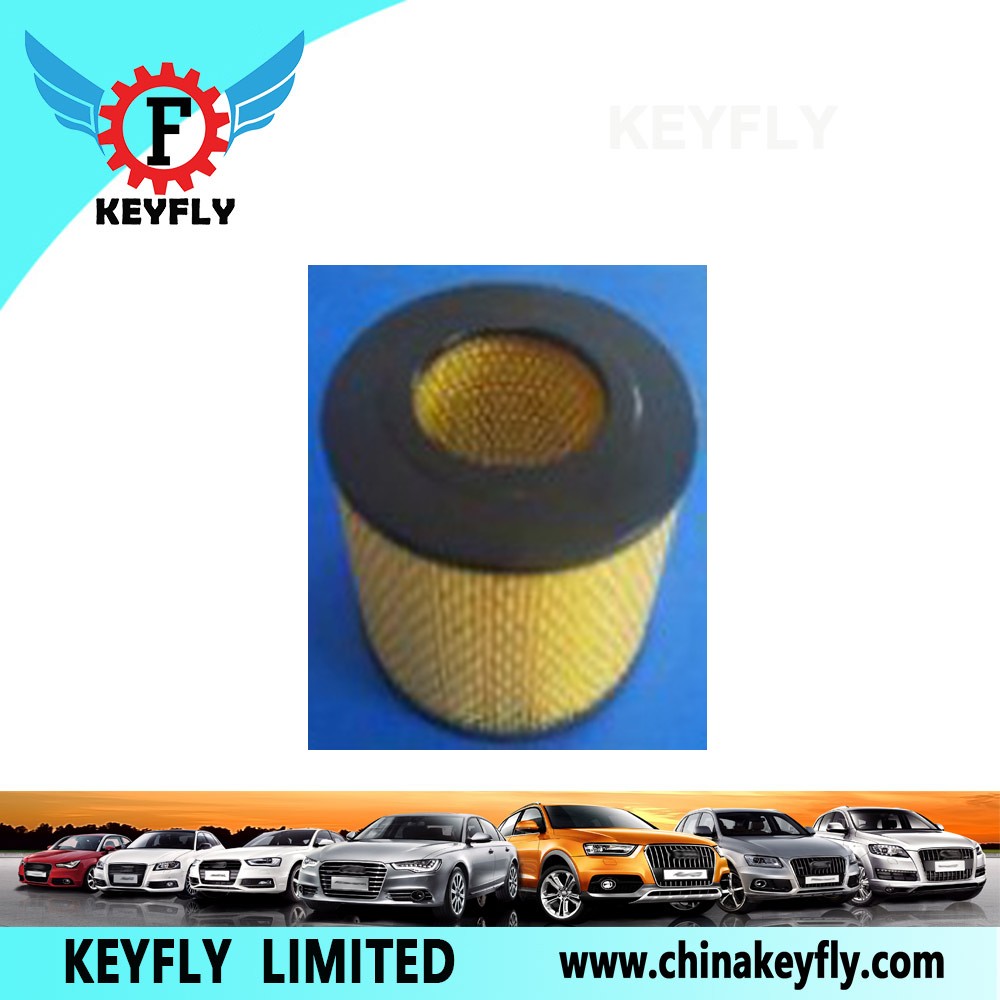
For a workshop or a small distributor, a practical opening ratio is roughly four engine air filters to two oil filters to one cabin filter per fast-moving model. If you import for pickups and light trucks, add fuel filters for the diesel references. The KEYFLY car filter range covers more than 1,700 references across Japanese, Korean, American and European models, so a mixed-model order is possible instead of committing to a single brand. A reference such as this Toyota air filter 17801-61030 / 17801-60040 is typical of the high-turnover numbers worth stocking in depth.
Signs You Waited Too Long
- Air filter: grey-black pleats, dust falling out when tapped, a gasket that no longer seals.
- Oil filter: oil that turns black within a few hundred kilometres of a change.
- Fuel filter: hesitation under load, hard cold starts, a water warning light that stays on.
- Cabin filter: weak airflow on the first fan speed, musty smell when the A/C starts.
Replace on condition as well as on distance. A modest filter changed on time protects an engine better than an expensive one run to double the interval — the argument we make to buyers who question a higher unit price.
About KEYFLY LIMITED
KEYFLY LIMITED (www.chinakeyfly.com) is a professional exporter of automotive spare parts — air filters, car locks and ignition switches, brake slack adjusters, body parts and wiper blades — serving distributors and wholesalers in Africa, South America, and Southeast Asia. Contact: vicky@chinakeyfly.com


